Trade show follow-up that doesn't die on Monday
How to leave an event with useful context, clear ownership, and follow-up that sounds like a continuation instead of a cold email.
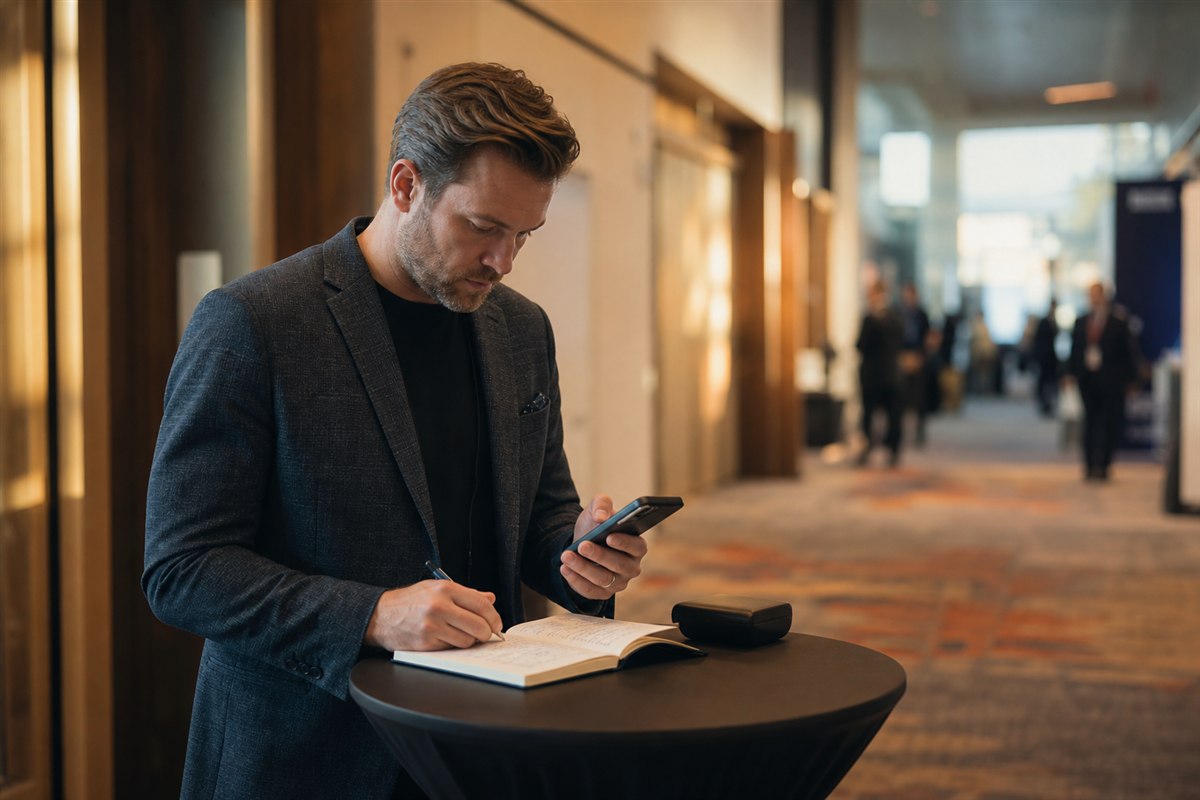
Most event follow-up fails before anyone gets home. A pile of badge scans is not a pipeline. Without context, priority, and a next step, every useful conversation slowly turns back into a cold lead.
Capture context, not just contact details
A name and an email tell the follow-up owner almost nothing. The useful notes are what the person cares about, what changed recently, who else is involved, and what you offered to send or do next.
Write the note before starting the next conversation. Twenty seconds of context is worth more than another unqualified scan.
Sort the list before leaving the venue
Not every friendly conversation deserves the same sequence. Mark the people with a specific problem and a real next step. Separate partners, future-fit accounts, job seekers, vendors, and casual visitors.
This prevents your best conversations from entering the same generic automation as everyone who took a tote bag.
- Priority: a live problem, buyer access, and an agreed next step
- Nurture: relevant, but no active reason to move
- Network: useful relationship, not a sales opportunity
Continue the conversation you actually had
The first line should make the person remember the exchange. Mention the question, example, or disagreement that made it specific. Then do the thing you promised before asking for more time.
A useful follow-up can be short. It just cannot sound like the event never happened.
Give every priority lead an owner and a date
The Monday after an event is crowded. If follow-up belongs to 'the team,' it usually belongs to nobody. Assign one person, one next action, and one deadline before travel begins.
The event creates attention. The handoff determines whether that attention becomes a relationship.